Cards are the center of [🃏] Anime Card Collection: the official description says opened cards enter your Binder automatically and generate money that can fund better packs. The public media also shows card-shaped collectibles, star rows, UR and LEGEND labels, a Binder display, and an income-per-second presentation. Those sources confirm the shape of the collection loop, but they do not provide a complete card list or readable, stable stats for every card.
This Card Dex therefore starts with verified visual records, not invented character names. Use the displayed name in your current Binder as the deciding label. Do not import a roster, rarity ladder, tier list, or income table from the other Roblox experience with the same title.
Currently documented card visuals

Two-card UR display
Visible fields: UR labels, card art, borders, and star rows.
Name: not readable as an in-game display name.
Pack source and income: not shown.
Official media · checked 2026-09-07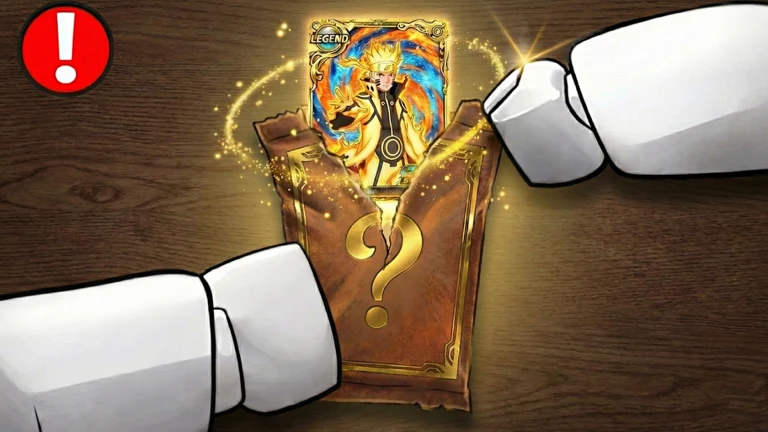
LEGEND pack reveal
Visible fields: LEGEND label, ornate card border, and reveal presentation.
Name: no readable in-game display name is available.
Odds and value: not published by the image.
Official media · checked 2026-09-07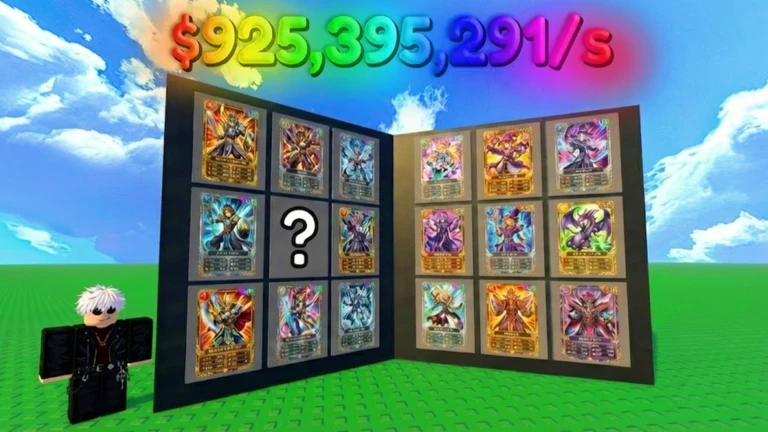
Binder collection view
Visible fields: multiple card slots and a large `/s` income display.
Completeness: the pictured spread is promotional evidence, not a complete roster.
Missing slot: one question-mark slot is visible; its identity is not disclosed.
Official media · checked 2026-09-07Read a card before comparing it
Begin with the card’s exact display name, then record only the fields that the current interface actually shows. A useful comparison can include rarity text, stars, money per second, and the pack or source that produced the card. If a field is absent, leave it unset. A border color or familiar character image is not a safe substitute for an on-screen label.
Treat every field separately. The official media supports the existence of UR and LEGEND labels, but it does not prove the complete rarity order. A visible star row proves that stars are presented, not how stars affect income. A card appearing from a pack proves that pack opening can reveal cards, not the odds for a particular result.
When you compare two cards, use the same server and the same display. If the Binder shows an income figure on each card, copy the units as well as the number. Do not compare a total /s figure from the Binder cover with an individual card value unless the interface clearly labels both.
Build a reliable personal Card Dex
Use one row or note per unique displayed card. Record the date and current Place ID so a later update does not overwrite your memory of an older value. The most useful fields are:
- Display name: copy the exact spelling shown in the Binder.
- Visible alias: add an alternate spelling only when the game itself shows one.
- Rarity label: record the text, not a guessed color tier.
- Stars: copy the visible count or value without assuming its effect.
- Income: include the number and time unit exactly as displayed.
- Pack or source: record the pack name only if the opening or result screen identifies it.
- Collection state: collected, missing, or not checked.
- Verification: current live observation, official media, or not yet confirmed.
- Checked date: the UTC date or your local date with a timezone.
This structure helps you answer “which card am I missing?” without pretending the public roster is complete. It also separates collection progress from optimization: a card can fill a missing slot even when its income is lower than another card you already own.
Decide which cards deserve attention
There is not enough exact-target evidence for a best-cards ranking. Until a full current roster and repeatable income values exist, make decisions around your own Binder rather than a universal tier list.
For collection progress, prioritize clearly missing slots and identify which verified pack produced neighboring cards only if the game supports that relationship. For income progress, compare the current displayed rate before and after a new card is collected. For pack decisions, balance the cost of another attempt against the visible improvement you are trying to obtain.
A rare-looking card is not automatically the best next target. The useful question is whether it fills a gap, increases a displayed income measure, or unlocks something the current game explicitly explains. Do not add combat roles, traits, mutations, grades, or trading value unless Place 81089945895600 shows those systems.
Follow a card from pack to Binder
The official loop says cards are collected automatically. After opening a pack, note the reveal result, then open the Binder and locate the new entry. Match the display name, art, rarity text, and stars rather than relying on art alone. If an income figure changes, record the before-and-after state and visit the Card Income guide for a clean comparison method.
If the card does not appear immediately, confirm that the pack opening completed and that you are looking at the correct Binder page. The exact page order, filters, duplicate handling, and refresh behavior are not publicly documented. Avoid repeated purchases until you know whether the result was saved.
The Packs index explains how to capture the pack-side fields without assigning unofficial names. Keeping the pack record and Binder record together is more valuable than guessing a complete drop table from a small sample.
Avoid the same-name game trap
Public search results frequently describe a different Anime Card Collection by Crew Simulators. Its Place ID is 76285745979410, while this Dex covers Peak Anime’s Place 81089945895600. Do not bring over its total-card claims, pack count, grading system, mutations, relics, pets, traits, marketplace values, or rarity multipliers.
If a guide does not show its Roblox destination, open its “play” link before using any card detail. The creator and numeric Place ID should match. When they do not, even a correctly spelled card name belongs to a different product and should not enter this Dex.
Card collection mistakes to avoid
Naming from artwork
Use the game's displayed name. Artwork can reference a familiar character without proving the card's actual label or variant.
Building a tier list too early
A few promotional images cannot establish the full roster, current balance, or the best income choice.
Treating colors as rules
Record `UR` or `LEGEND` when visible, but do not invent the tiers between them or their ordering.
Mixing total and card income
Keep the Binder total separate from a per-card figure unless the interface labels the relationship.
Cards FAQ
Is there a complete Anime Card Collection card list?
No complete card roster for the Peak Anime experience is verified here. The official media shows multiple cards and a Binder, but it does not expose every readable name or current value.
What rarities are confirmed?
UR and LEGEND labels are visible in official media. A complete rarity ladder and its effects still need live confirmation.
Do cards make money?
Yes. The official description explicitly says cards generate money. Exact base values, multipliers, offline behavior, and collection rules are not published.
Are the pictured cards guaranteed to be obtainable now?
The images are approved media for the exact universe, so they document how the experience has been presented. They do not by themselves prove current availability, odds, or unchanged stats in a live server.
Where should I go next?
Use Packs to understand the purchase-and-opening side, Binder to manage collection state, and Card Income to compare displayed earnings without inventing fixed values.